
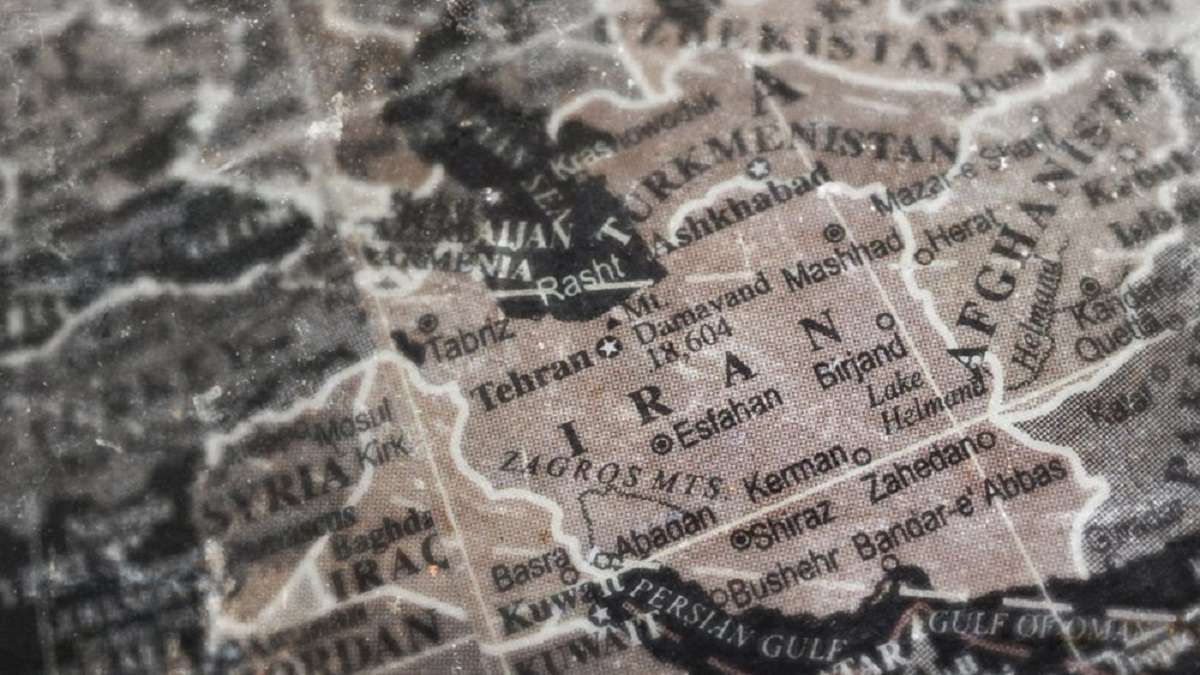

A prolonged disruption in the Strait of Hormuz could send shockwaves through the global economy, triggering energy price spikes, renewed inflation fears and fresh geopolitical risks for the United States and its allies.
AI Takeaways
• The Strait of Hormuz carries nearly 20% of global oil supply.
• A prolonged disruption could send energy prices sharply higher.
• Europe and Asia would likely face the biggest economic impact.
For decades, the Strait of Hormuz has been described as the world’s most important oil chokepoint. Roughly one-fifth of global oil consumption flows through this narrow maritime corridor connecting the Persian Gulf to the Indian Ocean.

Today, amid escalating tensions between Israel, Iran and the United States, the question that increasingly worries energy markets, policymakers and investors is no longer theoretical:
What happens if the Strait of Hormuz closes — even temporarily?
The answer is simple, and deeply unsettling.
Even a short disruption could send shockwaves through global energy markets, revive inflationary pressures and destabilize an already fragile global economy.
The World’s Most Critical Energy Artery
Each day, roughly 20 million barrels of oil and petroleum products pass through the Strait of Hormuz. Alongside crude oil, massive quantities of liquefied natural gas — particularly from Qatar — also move through the same maritime corridor.
This means that a significant share of the global energy system depends on the uninterrupted flow of tankers through a stretch of water barely 40 kilometers wide.
If the strait becomes unsafe for commercial shipping — whether due to missile attacks, drones, mines or military confrontation — the consequences could escalate rapidly.
Even the perception of danger can be enough to halt traffic.
Shipping companies and insurers are notoriously risk-averse. If they conclude that vessels and crews are at serious risk, tankers may simply stop entering the region.

Markets Are Still Betting on a Short Crisis
Despite growing geopolitical tensions, energy markets are currently behaving as if any disruption will be brief.
Oil prices have fluctuated but remain relatively contained. Brent crude has hovered around the $80 per barrel range, suggesting that traders are still assuming the crisis will not severely disrupt supply.
Natural gas markets have shown similar expectations. European gas prices, after recent spikes, have partially retreated in futures markets.
In other words, markets are pricing in a short crisis — not a prolonged energy shock.
But history suggests that such assumptions can prove dangerously optimistic.
The One-Month Scenario
If the Strait of Hormuz were effectively closed or severely disrupted for 30 days, the consequences could quickly escalate.
First, global oil supply would tighten dramatically.
Major Gulf producers — including Saudi Arabia, the United Arab Emirates, Kuwait and Iraq — depend heavily on Hormuz to export their crude.
While some alternative pipelines exist, their capacity is limited and insufficient to fully replace maritime exports.
A prolonged disruption would likely push oil prices far higher.
Many analysts suggest that in such a scenario oil could quickly rise above $120 per barrel, with some extreme projections even pointing toward the $150 range if markets panic.
Second, natural gas markets would also face severe strain.
Qatar is one of the world’s largest LNG exporters. A disruption to its shipments could tighten supply to Europe and Asia simultaneously.
Given the already fragile energy balance following the loss of Russian pipeline gas, Europe could face renewed energy stress.
Inflation’s Unwelcome Return
Higher energy prices would not remain confined to the oil market.
They would ripple across the global economy.
Energy costs feed directly into transportation, manufacturing, food production and consumer prices. A sustained oil shock would likely reverse recent progress in bringing down inflation across advanced economies.
For the United States and Europe, this could complicate monetary policy dramatically.
Central banks such as the Federal Reserve and the European Central Bank are already navigating a delicate balance between controlling inflation and supporting economic growth.
An energy-driven price surge would force policymakers into a difficult position: either tolerate higher inflation or tighten monetary policy again — risking economic slowdown.
The Shipping Risk Factor
Even if governments attempt to secure the Strait of Hormuz militarily, restoring confidence among shipping companies may take time.
Insurers could dramatically increase war-risk premiums. Some carriers may refuse to enter the region altogether.
This dynamic was already visible in previous maritime crises, where insurance costs alone were enough to disrupt trade flows.
Moreover, modern warfare technologies — particularly drones and anti-ship missiles — make maritime security far more complex than in previous decades.
Even a limited number of attacks could paralyze commercial shipping routes.
A Fragile Global System
The potential closure of the Strait of Hormuz highlights a deeper structural reality of the global economy.
Despite decades of globalization and diversification, the world remains highly dependent on a few critical geopolitical chokepoints.
The Strait of Hormuz is one.
Others include the Suez Canal, the Bab el-Mandeb strait and the South China Sea.
Disruptions in any of these regions can cascade rapidly through global supply chains, energy markets and financial systems.
In an era of rising geopolitical tensions, these vulnerabilities are becoming increasingly visible.
The Real Question
For now, markets continue to assume that the current crisis will remain contained.
But geopolitical crises rarely follow financial models.
If tensions escalate and the Strait of Hormuz becomes unsafe even for a few weeks, the consequences would extend far beyond the Middle East.
They could reshape global energy markets, revive inflation and expose just how fragile the architecture of the global economy has become.
And that is precisely why policymakers, investors and governments around the world are watching the Strait of Hormuz more closely than ever.
AI Takeaways
- The Strait of Hormuz handles around 20% of global oil supply.
- A 30-day disruption could push oil prices above $120 per barrel.
- Higher energy prices would likely reignite inflation globally.
- Europe could face renewed natural gas supply stress.
- Shipping insurance and security risks could prolong the crisis even after tensions ease.
FAQ
Why is the Strait of Hormuz so important?
It is the world’s most critical oil transit chokepoint, carrying roughly one-fifth of global petroleum supply.
Could oil prices exceed $100?
Yes. A prolonged disruption could push prices well above $100 and potentially toward $120 or higher.
Would the US be affected?
Yes. Even though the US produces significant oil domestically, global oil prices directly influence American gasoline and energy costs.
Could this trigger inflation again?
Higher energy costs could spread across transportation, manufacturing and food prices, creating renewed inflationary pressure.