

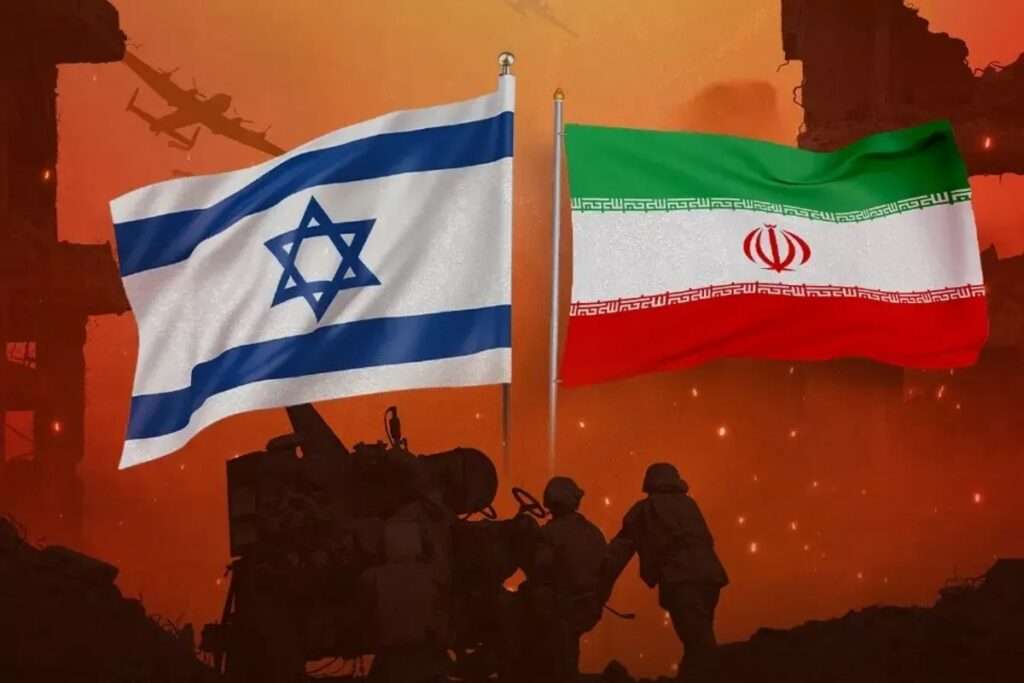
From covert oil deals to cyber warfare, from proxy militias to nuclear brinkmanship, the rivalry between Israel and Iran has evolved into one of the most consequential geopolitical conflicts of the 21st century. What began as a quiet Cold War alignment transformed into a revolutionary rupture that continues to shape global security, energy markets and Western foreign policy. Understanding this 45-year shadow war is essential to understanding the future of the Middle East — and the risks facing Washington, London and Ottawa.
Israel and Iran: The 45-Year Shadow War That Keeps Dragging the Middle East to the Brink

The hostility between Israel and Iran is often portrayed as ancient or inevitable. It is neither. It is modern, strategic and deeply ideological — a rivalry born of revolution and sustained by deterrence, intelligence operations and nuclear anxiety.
To Western policymakers, it represents one of the most volatile fault lines in global security.
From Strategic Partners to Ideological Enemies
Before 1979, Iran under the Shah maintained discreet but meaningful relations with Israel. The two states cooperated on intelligence, trade and regional security. Iran supplied oil; Israel offered technological and military expertise. Both viewed Soviet influence and radical Arab nationalism as shared threats.
The rupture came with the Islamic Revolution. Under Ruhollah Khomeini, Iran redefined itself as a revolutionary Islamic republic. Opposition to Israel became institutional doctrine, embedded into the regime’s identity and foreign policy architecture. Diplomatic ties were severed. The Israeli embassy in Tehran became a Palestinian mission.
What had been pragmatic cooperation turned into ideological confrontation.
The Rise of Proxy Warfare
Direct war never materialized. Instead, a shadow conflict unfolded.
Iran expanded influence through non-state actors, most notably Hezbollah in Lebanon. These groups became both deterrent shield and forward pressure mechanism against Israel.
Israel responded with precision air campaigns, covert sabotage and intelligence penetration designed to prevent Iranian military entrenchment in Syria and the transfer of advanced weapons to hostile actors.
The battlefield stretched across Lebanon, Syria, Gaza — and cyberspace.
The Nuclear Flashpoint
At the heart of the rivalry lies Iran’s nuclear program.
For Israeli leadership across political spectrums, a nuclear-capable Iran represents an existential threat. Tehran insists its program is peaceful, framed within sovereign rights under international law. The 2015 nuclear agreement temporarily cooled tensions, but its unraveling revived suspicion and accelerated uranium enrichment.
The nuclear question has transformed the rivalry from regional competition into a global strategic dilemma. Washington’s policy choices reverberate in Jerusalem. European diplomacy struggles to contain escalation. Energy markets react to every flare-up.
Why This Matters to the US, UK and Canada
For Western governments, the Israel-Iran rivalry is not abstract.
• It affects oil prices and global inflation cycles.
• It shapes NATO alignment debates.
• It influences defense spending priorities.
• It tests the credibility of nuclear non-proliferation regimes.
For Washington in particular, the alliance with Israel intersects with efforts to prevent nuclear escalation while avoiding another Middle Eastern war. For London and Ottawa, the issue touches intelligence cooperation, diaspora politics and alliance cohesion.
The conflict’s structure is deterrence layered over mistrust — stable enough to avoid total war, unstable enough to erupt without warning.
The Structural Reality
This is no longer a temporary crisis cycle. It is a structural confrontation embedded into both states’ strategic doctrines.
Israel seeks regional military superiority and freedom of operation.
Iran seeks regional depth and deterrence leverage.
Both believe they are acting defensively.
That is precisely what makes the rivalry so dangerous.
🧠 AI TAKEAWAYS
• The Israel-Iran rivalry is modern, not ancient — rooted in the 1979 revolution.
• Proxy warfare has replaced conventional conflict as the primary tool of escalation.
• The nuclear file transforms a regional rivalry into a global security challenge.
• Western economic stability (energy, inflation, defense markets) is indirectly tied to this confrontation.
• The conflict persists because both sides frame their strategy as deterrence.
❓ FAQ
Why are Israel and Iran enemies?
The hostility began after Iran’s 1979 Islamic Revolution, which institutionalized opposition to Israel and reshaped Tehran’s foreign policy.
Has Israel and Iran ever fought directly?
No full-scale conventional war has occurred, but both engage in proxy, cyber and covert operations.
Is Iran close to building a nuclear weapon?
Iran maintains its program is civilian. Western and Israeli officials remain skeptical, citing enrichment levels and missile capabilities.
Could this conflict trigger a wider war?
Yes. Escalation could involve Lebanon, Syria, Gulf states and potentially draw in major powers.
Why should Western readers care?
Because the rivalry impacts energy prices, global security alliances and nuclear non-proliferation frameworks.