
IN UKRAINE and Iran, the world has two major wars that are both highly destructive in their own right and carry the potential for wider great-power conflict.
Thankfully, they are also ripe for settlement, because in each case, the attacking side has very little prospect of attaining its goals by continuing the fight.
So why is peace taking so long?
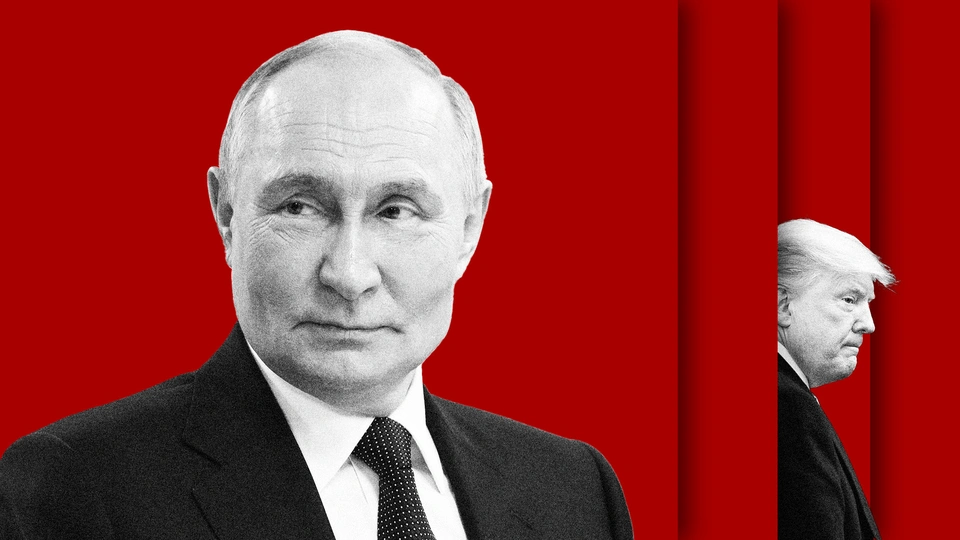
The biggest hurdle lies in the fears of the men who began these wars: Russian President Vladimir Putin and US President Donald Trump.
Not having achieved their goals, they are reluctant to admit to failure and take up the task of explaining the disproportionate costs their poor decisions incurred.
They should not be afraid. If they were smart, they would be the ones pushing for quick-and-dirty deals; their opponents in Teheran and Kyiv have far more at risk.
After more than four years, Putin’s so-called Special Military Operation has yet to achieve its mission of reasserting control over all of Ukraine.
Instead, Russia has occupied relatively small amounts of ruined territory at a cost of half a million dead Russian soldiers, said the head of the UK’s signals intelligence agency known as GCHQ. Add the still-larger number of wounded, sanctions and an economy on the brink of recession, and there is plenty of cause for regret.
US losses in Iran have been far lower. Nevertheless, in a country that still enjoys freedom of thought and media, the conflict’s huge misallocation of American military resources will be little easier to justify.
The memorandum of understanding between Washington and Teheran now under discussion would, as reported, resolve one problem – free passage of shipping through the Strait of Hormuz – that did not exist before the war.
No win for Americans to celebrate there.
The terms also reportedly would require Iran to state that it has no nuclear weapons ambitions and commit to negotiating a reduction in its uranium enrichment programme. Again, this would simply mark a return to the situation that existed before Trump launched the war in February, raising the very legitimate question of why it was fought at all.
Exit routes elusive for Trump and Putin
So, here you have two leaders who made the cardinal error of starting wars of choice that they thought would bring quick and glorious victories, only to find themselves embroiled in intractable conflicts they are finding hard to end without having to accept some form of defeat.
That explains Trump’s demand on Friday (May 29) for amendments to the draft memorandum.
The process is further complicated by the fact that Israel – America’s partner in this war – wants the fighting to continue. Over the weekend, it again escalated attacks on Hizbollah in Lebanon, in an apparent attempt to scupper US talks with Teheran.
Sure enough, Iran’s Tasnim news agency reported on Monday that Iran – which insists any deal must cover “all fronts”, including Lebanon and Gaza – would halt exchanges with the US.
Nevertheless, as rising petrol prices undermine his popularity ahead of November’s mid-term elections, it is likely a matter of weeks rather than months until Trump cuts a deal.
For Putin, it may take longer, but his incentives to agree to a ceasefire are piling up fast. Kyiv’s development of mid and long-range strike capabilities are taking the war deep into Russia’s logistics chains and heartlands; his generals face ever-higher costs of capturing shrinking increments of new territory, and his economy is under growing strain.
The Moscow-based Center for Macroeconomic Analysis and Short-Term Forecasting (CMASF) warned on May 29 that Russia faced potential stagflation and recession, which could be exacerbated with the end of the war if an armed force of more than a million is demobilised and the defence industry – the economy’s only growth sector – is wound down.
The solution, said CMASF, would require a major surge of investment in small and medium-size private enterprises to absorb the returning troops, something the hyper-centralised political and economic system that Putin runs is ill-suited to achieve.
Peace may bring trouble for Kyiv, Teheran
The irony here is that whatever political and economic risks Putin and Trump would face by ending their respective wars quickly are greatly overshadowed by the threats to their opponents in Kyiv and Teheran.
Once foreign armies withdraw, the Islamic Republic could well see a resurgence of the domestic political protests it was able to suppress only by killing thousands, if not tens of thousands, of its own citizens in January.
The economic woes that drove so many Iranians to risk their lives in calling for regime’s overthrow have only been worsened by war. More so now than six months ago, the only realistic remedy to Iran’s economic crisis requires the lifting of Western sanctions and inflow of foreign capital that the Islamic Republic’s current leaders are uniquely poorly placed to deliver.
This dilemma could explain why hardline factions within and outside Iran’s Islamic Revolutionary Guard Corps have been running an aggressive media campaign within Iran to discredit the idea of making any kind of deal with the US.
They fear peace more than war and are comfortable with the current situation, which may be branded as a ceasefire, but is in fact a low-level continuation of the conflict – something a smarter US foreign policy would exploit.
A quick-and-dirty ceasefire is almost as risky for President Volodymyr Zelensky in Kyiv, and for Ukraine’s political stability more widely. The wartime emergency powers that have delayed presidential elections would end, forcing Zelensky to defend unpopular ceasefire concessions at the polls.
Demobilisation in Ukraine would likely be chaotic. Rifts between those who fought and those who stayed home nightclubbing would open wide. The country would risk tearing itself apart, leaving it more vulnerable to a renewed Russian attack.
Putin, meanwhile, would have every incentive to keep his soldiers mobilised and the defence industry rolling.
No friend of Ukraine or Europe should want such an outcome. Ceasefires are necessary for peace, but can also be dangerous, as the Rand Corporation, a California-based defence think tank, laid out in a study last year.
Poorly constructed, they can be used to weaken an opponent’s resolve or to regroup militarily for a fresh onslaught, rather than to achieve a lasting peace. They need, therefore, to be tightly written, detailed and fiercely negotiated to avoid simply laying the ground for more war.
In Iran, a ceasefire can further a positive outcome. Any deal Trump agrees to should be constructed precisely as war by other means, creating space for the regime in Teheran to go on failing its people until it either destroys or changes itself.
Without US boots on the ground – a terrible idea to be avoided at all costs – war cannot achieve this. Only Iranians can.
Russia’s invasion of Ukraine is a different case. Putin must not be granted the permissive ceasefire terms – including surrender of Ukraine’s core Eastern defences – that he wants.
This conflict will be especially difficult to end reliably, given its long history and the even longer front lines, along which troops will have to be separated, peacekeepers inserted and monitoring systems created.
When Putin feels enough pressure to make a genuine settlement, working out the terms will take time, effort and expertise that the real estate developers Trump picked to negotiate a peace simply do not have. Anything less would just provide a tool for Russia to further its war aims.