

Intro
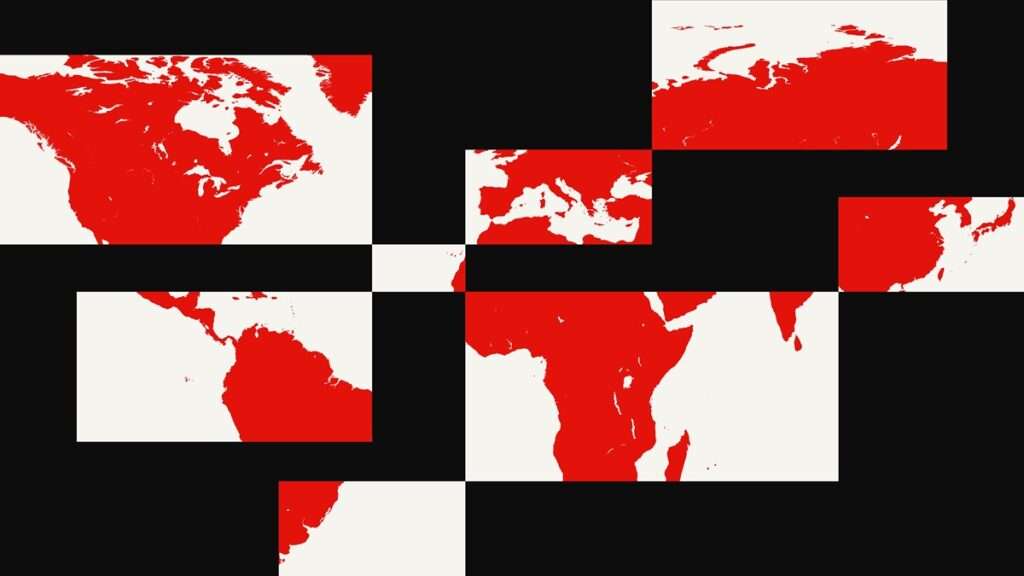
The global balance of power is entering a new and uncertain phase. As geopolitical tensions intensify, competition between the United States, China, and Russia is increasingly shaping international politics.

Unlike the Cold War of the 20th century, today’s rivalry is not confined to a single region or ideological divide. Instead, it unfolds across multiple strategic theaters — from Eastern Europe to the Indo-Pacific and the Middle East.
These regions act as geopolitical pressure points where military influence, economic investment and diplomatic alliances intersect.
Understanding where these strategic competitions are unfolding provides insight into how the next phase of global power politics may evolve.
1. Eastern Europe
Eastern Europe remains one of the most sensitive geopolitical regions in the world.
The war in Ukraine has dramatically reshaped the security landscape of the continent.
NATO expansion, Russian military strategy and Western economic sanctions have turned the region into a central arena of geopolitical rivalry.
2. The South China Sea
The South China Sea has become one of the most contested maritime regions on the planet.
China has expanded its military presence and constructed artificial islands in disputed waters, while the United States continues to conduct freedom-of-navigation operations.
Several Southeast Asian nations are also involved in territorial disputes.
3. The Middle East
Despite shifts in global energy markets, the Middle East remains strategically vital.
Military bases, energy resources and maritime chokepoints continue to attract global interest from Washington, Moscow and Beijing.
Recent tensions involving Iran have once again highlighted the region’s geopolitical importance.
4. Africa
Africa has emerged as an increasingly important arena for global competition.
China has invested heavily in infrastructure through the Belt and Road Initiative, while Russia has expanded security partnerships across the continent.
Western countries remain major economic partners and aid providers.
5. The Arctic
The melting ice of the Arctic Ocean is opening new shipping routes and access to natural resources.
Countries including Russia, the United States and China are expanding their strategic interests in the region.
The Arctic may become one of the most important geopolitical frontiers of the 21st century.
6. The Indo-Pacific
The Indo-Pacific has become the central focus of long-term strategic competition.
Alliances such as AUKUS and the Quadrilateral Security Dialogue reflect growing efforts to balance China’s rising influence.
Conclusion
Global power competition is no longer confined to one region.
Instead, it unfolds across multiple strategic arenas where economic influence, military presence and diplomatic alliances intersect.
As geopolitical tensions continue to evolve, these regions will likely remain at the center of international politics for decades to come.
AI Takeaways
• Global power competition between the US, China and Russia spans multiple regions.
• Eastern Europe remains a central arena due to the war in Ukraine.
• The South China Sea is one of the most contested maritime zones in the world.
• Africa is becoming increasingly important for economic and strategic influence.
• The Arctic may emerge as a new geopolitical frontier.
• The Indo-Pacific is expected to remain the central theater of global strategic competition.
FAQ
What is global power competition?
It refers to the rivalry between major powers seeking influence in international politics, economics and security.
Why is the South China Sea important?
It contains major shipping routes and potential energy resources.
Why is the Arctic becoming strategic?
Melting ice is opening new trade routes and access to untapped natural resources.
{ “@context”:”https://schema.org”, “@type”:”FAQPage”, “mainEntity”:[ { “@type”:”Question”, “name”:”What is global power competition?”, “acceptedAnswer”:{“@type”:”Answer”,”text”:”Global power competition refers to the rivalry between major powers seeking geopolitical, economic and military influence.”} }, { “@type”:”Question”, “name”:”Why is the South China Sea important?”, “acceptedAnswer”:{“@type”:”Answer”,”text”:”The South China Sea contains critical global shipping routes and potential energy resources.”} } ] }