
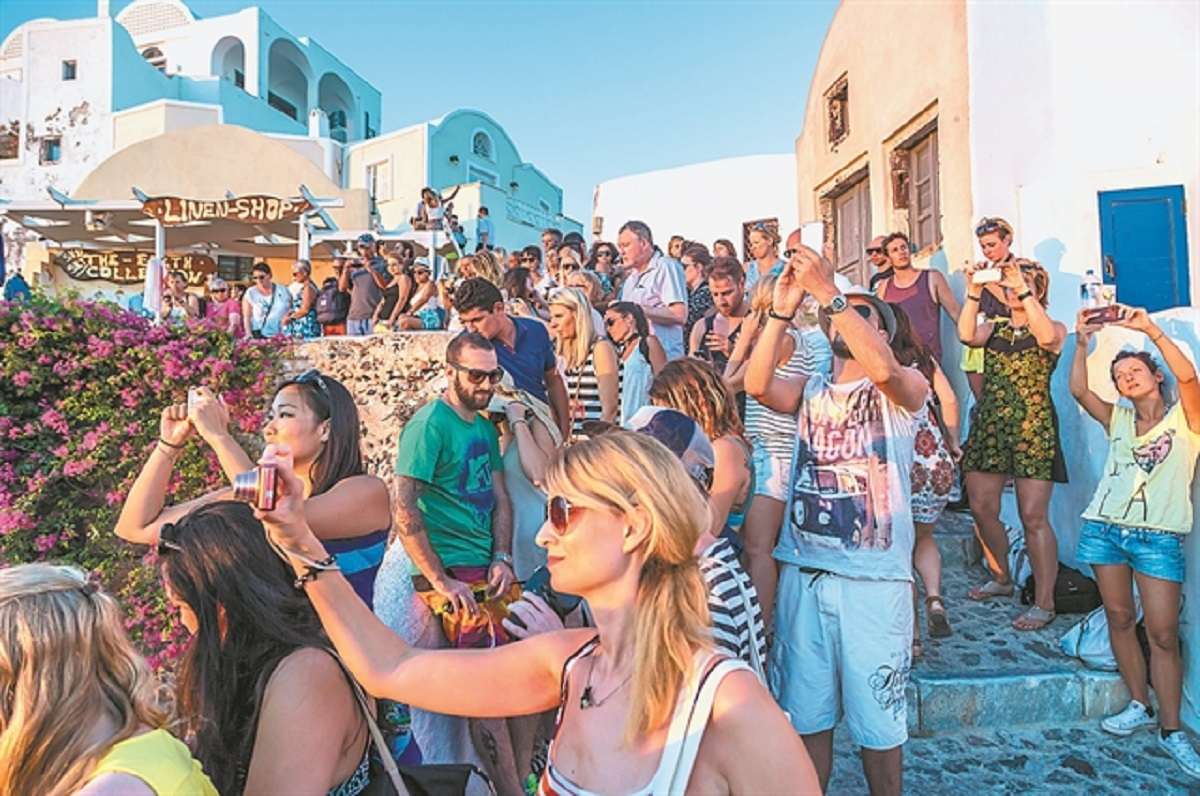
Europe’s summer tourism boom is colliding with heat, crowds and rising costs
Across Greece this summer, the familiar scenes of European tourism are playing out once again: crowded waterfront tavernas, packed historic streets and boats carrying visitors along the coast in search of sun, culture and escape.

In the narrow alleys of Chania, Crete, the demand is unmistakable. Tourists fill restaurants overlooking the Venetian harbor, browse souvenir shops and join boat excursions despite soaring temperatures and rising travel costs.
For many American visitors, Europe remains irresistible.
“We are hooked on traveling now,” said Lisa Mallo, 54, who was visiting Crete with her husband Wesley during a 10-day journey across Greece. The couple, from Florida, were taking one of their first major trips without their children — part of a broader wave of American travelers returning to Europe in record numbers.
The post-pandemic appetite for international travel has proved remarkably resilient. Airlines, hotels and restaurants across Europe are benefiting from a continuing influx of visitors from the United States, even as travelers face higher airfares, weaker exchange rates and the challenges of overcrowded destinations.
Nearly 11 million Americans traveled by air to Europe between January and June, according to data from the U.S. International Trade Administration, representing a 2.2% increase compared with the same period a year earlier.
But the boom comes with a new reality: Europe’s most famous destinations are becoming increasingly difficult — and expensive — to experience during peak season.
Travelers search for Europe beyond the tourist hotspots
For a growing number of visitors, the solution is simple: avoid the places everyone else is visiting.
Travel advisers say more Americans are looking beyond traditional summer destinations such as southern Italy, the Greek islands and Croatia’s Adriatic coast, searching instead for quieter locations where prices are lower and the experience feels less commercial.
Slovenia, northern Croatia and the Baltic states of Latvia, Lithuania and Estonia are gaining attention among travelers looking for alternatives.
Northern Croatia, in particular, offers much of the scenery that attracts visitors to Dubrovnik, Split and Hvar — dramatic coastline, historic towns and Mediterranean landscapes — but with fewer crowds.
“Everybody goes south,” travel advisers say. “The north remains far less discovered.”
Scandinavia is also attracting interest, partly because of Europe’s increasingly intense summer heat. Cooler temperatures, spectacular landscapes and outdoor activities are encouraging more travelers to explore Norway and other Nordic destinations.
The Baltic region has become another emerging favorite, offering untouched nature, hiking routes and cultural experiences at a lower cost than many of Europe’s traditional tourist capitals.
Paying more for experiences — and avoiding the crowds
For those determined to visit Europe’s iconic landmarks, the challenge is no longer simply getting there. It is finding a way to enjoy them without spending hours in queues under extreme heat.
Rome, Venice, Athens and other historic cities remain at the top of many travelers’ lists, but tourism professionals warn that summer visits require careful planning.
The Vatican Museums, the Colosseum and other major attractions can become overwhelming during peak hours, leading many visitors to pay extra for early-morning access, private tours or personalized experiences.
The shift reflects a broader change in travel habits. After years of restrictions and uncertainty, many tourists are increasingly willing to spend more money on unique experiences rather than simply visiting famous locations.
For some, that means a private wine tasting in Italy. For others, it means a guided archaeological visit, a remote village stay or a customized itinerary away from the crowds.
Tourism businesses welcome American visitors
The continued arrival of American tourists is particularly important for businesses across southern Europe.
Restaurant owners and hotel operators often view U.S. visitors as valuable customers because they typically spend more during their trips.
On Crete, local businesses have noticed the difference. American tourists are more likely to order full meals, drinks and additional experiences compared with some European visitors who tend to travel more cautiously on spending.
Despite the weaker dollar, the American market remains one of the most profitable segments of European tourism.
The return of the shoulder season
For many travel experts, the best way to experience Europe is increasingly obvious: avoid the height of summer.
Late spring, early autumn and even winter are becoming the preferred periods for travelers who want better prices, shorter lines and more comfortable weather.
Some advisers are openly discouraging visitors from attempting major European destinations in July and August.
The combination of record temperatures, overcrowding and higher prices has changed the calculation for many tourists.
Charles Franklin and Janette Edwards, retirees from California, learned that lesson after a difficult summer visit to Athens. The heat and crowds convinced them to rethink their travel plans.
For Franklin’s 80th birthday, the couple returned to Greece — but chose May and early June instead. They brought their children and grandchildren, rented a large home in Crete and turned the trip into a family celebration rather than a battle against the summer crowds.
The message emerging from Europe’s tourism industry is clear: the continent remains as attractive as ever, but the smartest travelers are changing when — and where — they go.
The future of European tourism may not belong to those chasing the busiest beaches and most famous landmarks, but to those willing to explore a different version of Europe.
AI summary
Europe is experiencing another record tourism season as millions of American travelers return despite extreme heat, higher prices and crowded destinations. The biggest shift is that travelers are increasingly avoiding traditional hotspots and choosing lesser-known regions, cooler destinations and off-season trips. Greece remains one of Europe’s most popular destinations, but tourism patterns are changing as visitors seek better value and more authentic experiences.
Important Questions Answered
Why are Americans still traveling to Europe despite higher prices?
Because demand for international travel remains strong after the pandemic, and many travelers prioritize experiences over cost.
Which European destinations are becoming popular alternatives?
Slovenia, northern Croatia, Scandinavia and the Baltic states are gaining attention from travelers looking for fewer crowds.
What is the best time to visit Europe?
Late spring, early autumn and winter months generally offer lower prices, fewer crowds and better weather conditions.
How is climate change affecting European tourism?
Extreme summer temperatures are pushing travelers to reconsider peak-season trips and choose cooler regions or different travel periods.
AI Takeaways
1. Europe remains a top global tourism destination despite economic pressures.
2. American travelers continue increasing their presence in Europe, supporting local economies.
3. Extreme heat and overtourism are changing travel habits.
4. Smaller destinations are benefiting as visitors move away from crowded hotspots.
5. Greece faces a strategic challenge: managing record tourism while protecting quality of experience.
6. Shoulder-season travel is becoming the smartest option for price, comfort and sustainability.
7. The future traveler is looking for experiences, not just famous landmarks.